

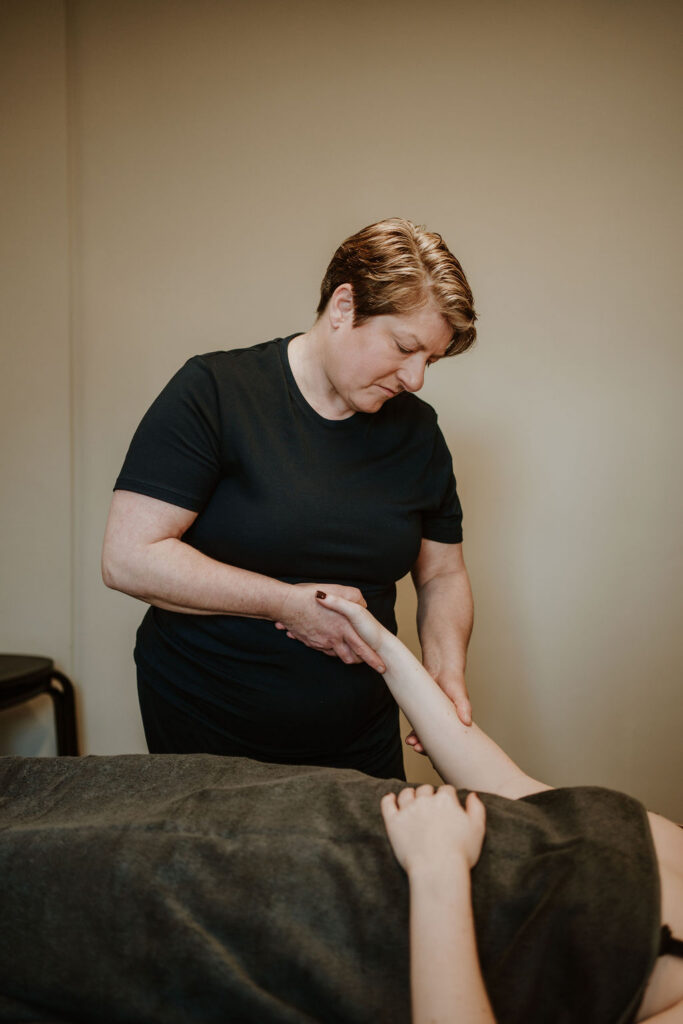
Perimenopause phase
When hormones begin to fluctuate unpredictably
It often starts silently before your periods even change. You might wake up feeling like your morning stiffness takes just a little longer to thaw out.
As oestrogen levels dip and spike, joint lubrication decreases and tendon elasticity changes. This is frequently when issues like frozen shoulder, tennis elbow, or unexplained hip and lower back tightness creep in. At the same time, subtle changes in collagen production can affect your core stability and pelvic floor, leading to a feeling of weakness or subtle urinary urgency. You might also notice heightened physical tension held tightly in your neck, jaw, and chest, making it harder to unwind at night.
Menopause phase
When hormones drop significantly rather than fluctuating unpredictably
As oestrogen decreases, your tissues lose a degree of natural hydration and elasticity. Tendons become tighter, ligaments become less forgiving, and muscle recovery slows down. You might find that your joint stiffness becomes a daily constant rather than an occasional annoyance. Shoulder mobility may feel restricted, and hip stiffness can begin to alter how you walk or old injuries resurface.
As pelvic floor tissues and core muscles lose hormonal support, lower back ache and pelvic girdle discomfort often peak during this phase. Combined with night sweats and disrupted sleep, your body can feel fatigued, tense, and unusually fragile.

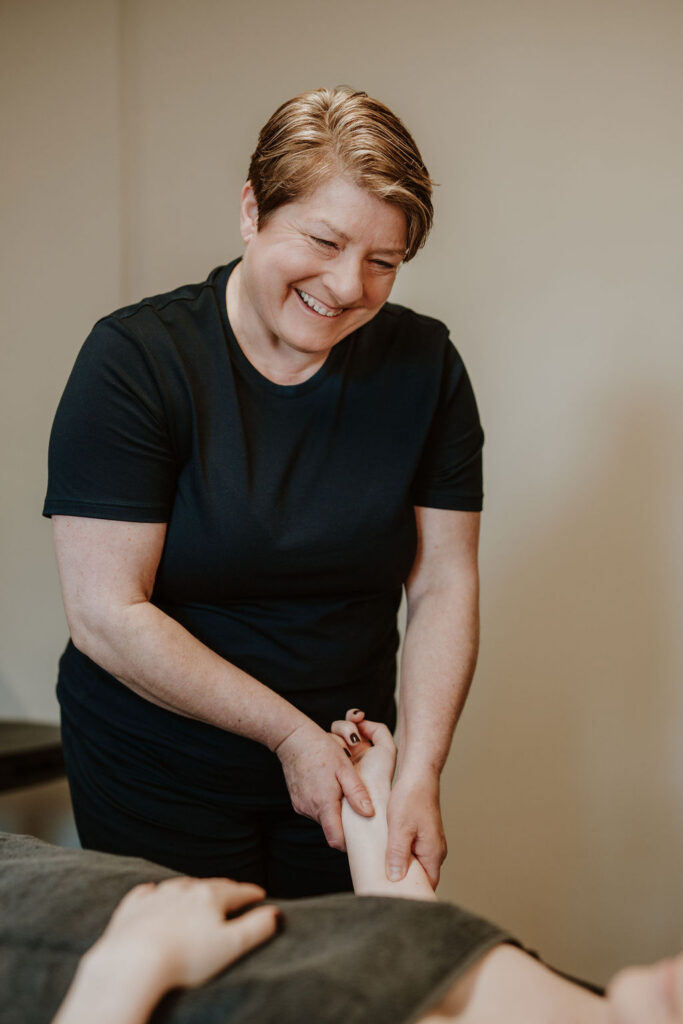
Postmenopause phase
When hormones settle at a stable, lower baseline.
While the sudden hormonal rollercoasters of perimenopause have passed, the focus now shifts to managing the long-term structural changes in your body.
With lower ongoing oestrogen, collagen turnover decreases and natural bone density declines (increasing the risk of osteopenia and osteoporosis). Postural changes such as rounded shoulders, a forward head tilt, or a compressed lower spine can develop, making standing, walking, or sitting for long periods uncomfortable. Altered hip mechanics can cause persistent lower back or glute pain, while pelvic floor weakness can affect daily confidence and exercise routines.
However, loss of mobility and strength is not an inevitable part of aging. With the right care and guidance, your body can adapt, build strength, and stay remarkably resilient.